Un protocole de socialisation basé sur la science
Nous avons mis en place un protocole de socialisation structuré et documenté, basé sur les recommandations officielles de la Plateforme européenne pour le bien-être animal
.
Les premières semaines de vie sont essentielles pour le développement émotionnel et comportemental du chiot. C’est pourquoi nous accompagnons chaque chiot de la naissance jusqu’à son départ avec un programme progressif et respectueux de son rythme.
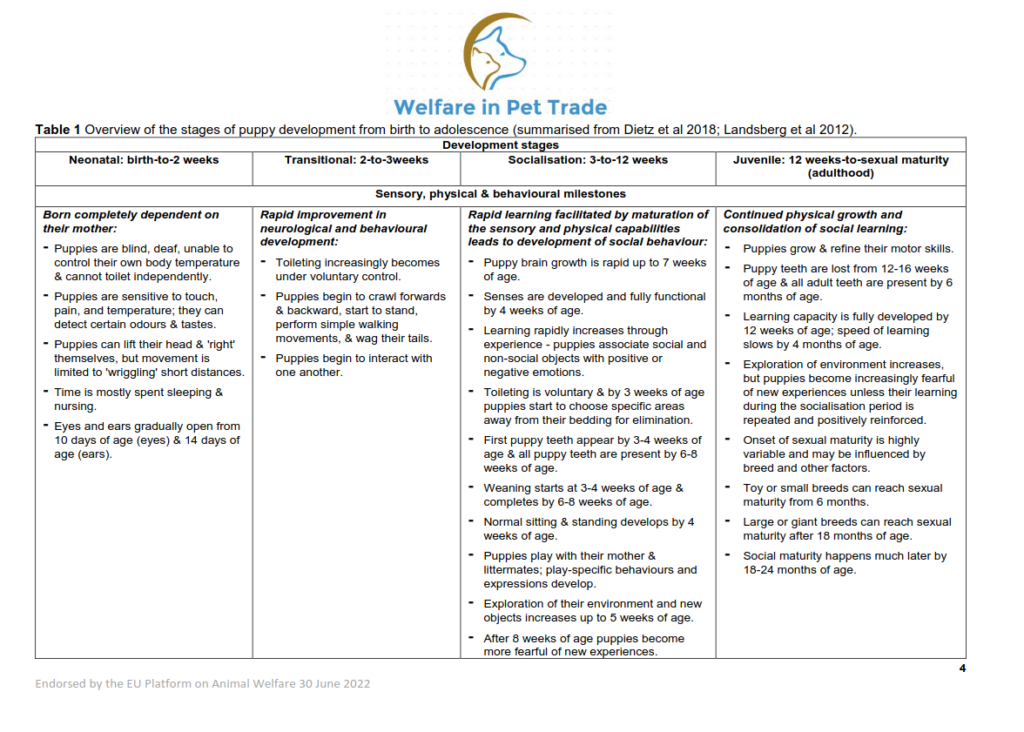
Socialisation précoce (3 à 12 semaines)
Durant cette période clé, les chiots bénéficient :
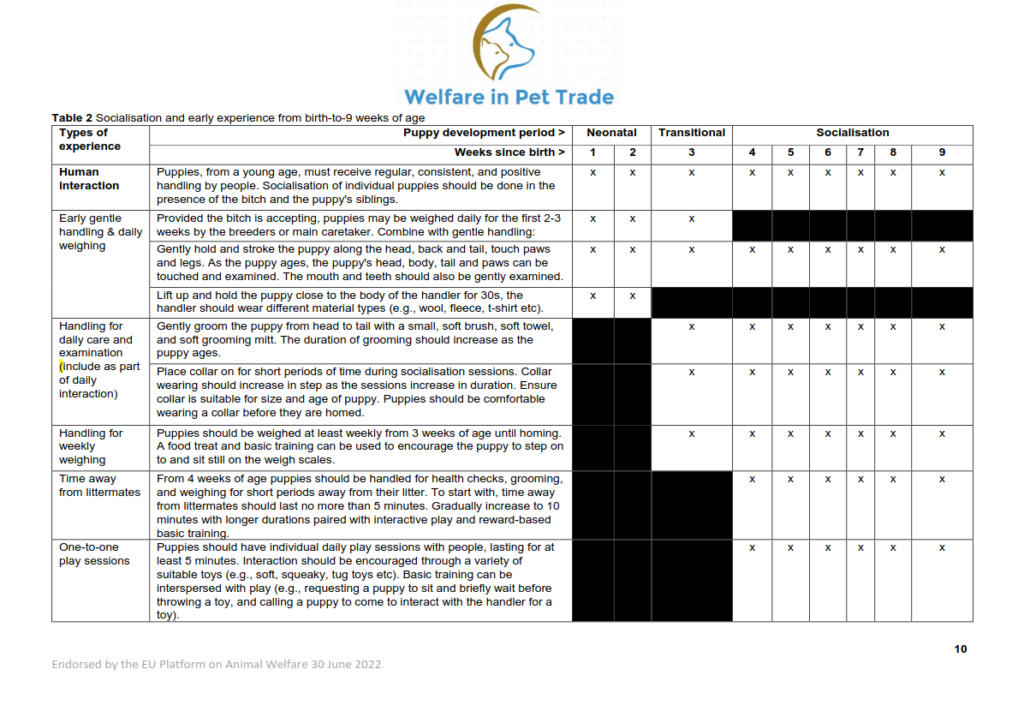
- de manipulations douces quotidiennes (pattes, oreilles, bouche, corps),
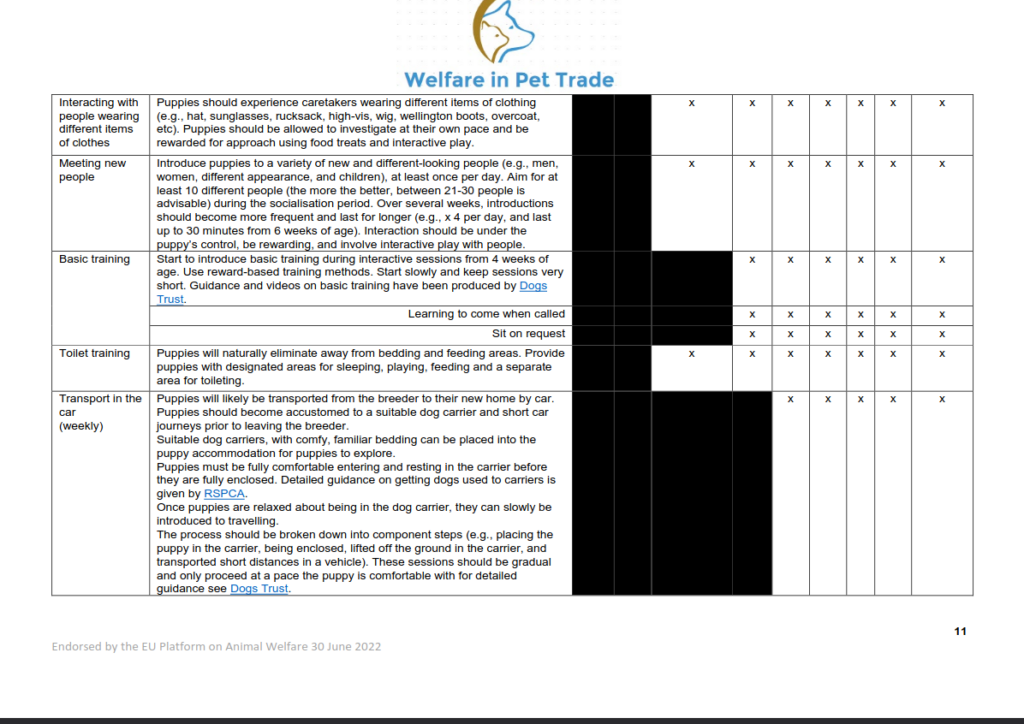
- de rencontres avec différentes personnes (adultes, enfants, profils variés),
- de stimulations positives à travers le jeu, le contact humain et l’exploration.
Habituation à l’environnement
Les chiots sont progressivement habitués à :
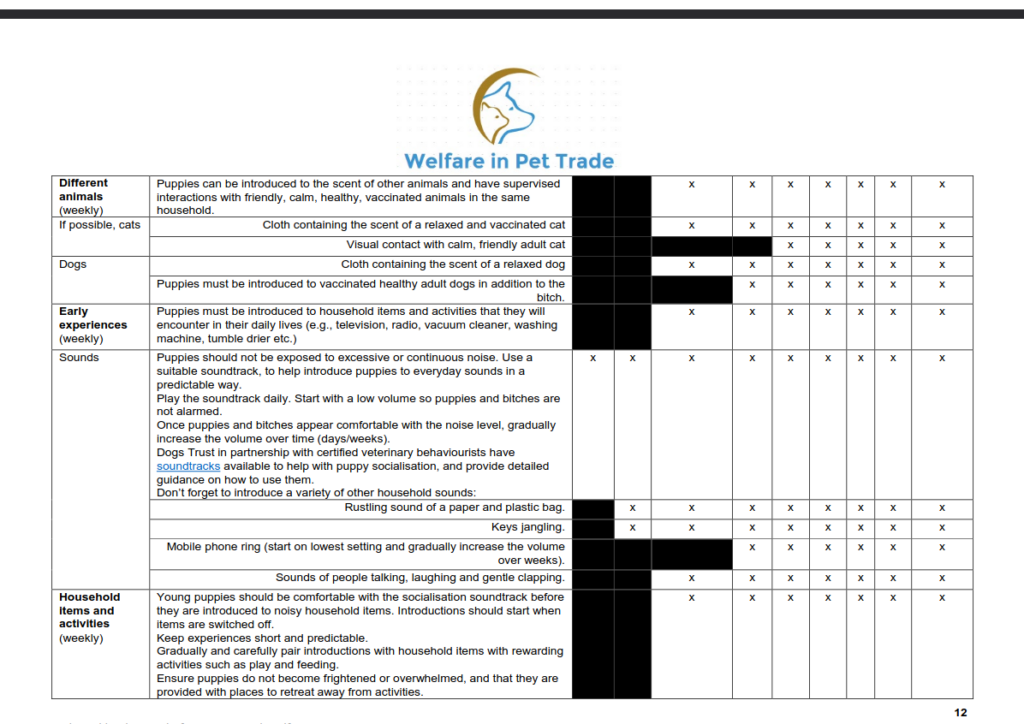
- les bruits du quotidien (aspirateur, télévision, téléphone, clés…),
- différents objets et surfaces (carrelage, herbe, tapis, sols lisses),
- les trajets en caisse de transport et de courtes sorties en voiture,
- la cohabitation avec d’autres animaux équilibrés.
Premiers apprentissages
Nous introduisons en douceur :
- la propreté,
- les premiers jeux éducatifs,
- le rappel, l’attente et l’interaction positive avec l’humain.
Chaque chiot quitte l’élevage avec une base solide, favorisant une adaptation sereine dans sa nouvelle famille. Les adoptants reçoivent également des conseils pour poursuivre la socialisation après le départ.
Science-Based Approach from Birth to Departure
We believe that a well-balanced Cavalier king Charles starts with a well-prepared puppy.
That is why we follow a structured, progressive and science-based socialisation protocol, inspired by the official recommendations endorsed by the EU Platform on Animal Welfare.
This protocol is an integral part of our breeding philosophy. It ensures that every puppy leaves us confident, curious, emotionally stable and ready for family life
Why Early Socialisation Is Essential
Puppies go through a critical learning window between 3 and 12 weeks of age.
During this sensitive period, their brain is developing rapidly and they form long-lasting associations with:
- Humans
- Other animals
- Sounds, sights and textures
- The home and outdoor environment
Positive experiences during this time help puppies grow into calm, adaptable adult dogs, while insufficient or negative exposure can increase the risk of fear, anxiety or behavioural difficulties later in life.
Our role as breeders is therefore not only to raise healthy puppies, but to actively shape their emotional and behavioural development.
Steps In Our Socialisation Programme
Our socialisation plan is age-appropriate, progressive and individualised, and is integrated into the puppies’ daily routine from birth until they join their new families.
1. Early Handling & Human Contact
From the very first days, puppies receive gentle, positive handling:
- Daily short handling sessions adapted to age
- Stroking, lifting, gentle examination of paws, ears, mouth and tail
- Calm, reassuring contact in the presence of the mother
As puppies grow, interactions increase in duration and variety.
They are introduced to many different people (men, women, different appearances and ages, including supervised children), always in a calm and positive way.
This early and repeated human contact helps puppies feel safe, relaxed and confident around people.
2. Gradual Exposure to the Home Environment
Puppies are progressively habituated to everyday life experiences they will encounter in their future homes:
- Household sounds (voices, TV, vacuum cleaner, keys, phone ringtones)
- Visual stimuli (different clothing, hats, sunglasses, bags, umbrellas)
- Objects and movements (pushchairs, suitcases, bicycles)
All exposures are introduced gradually, paired with positive experiences such as feeding or play, and never forced. Puppies are always free to retreat if they feel unsure.
3. Environmental Enrichment & Exploration
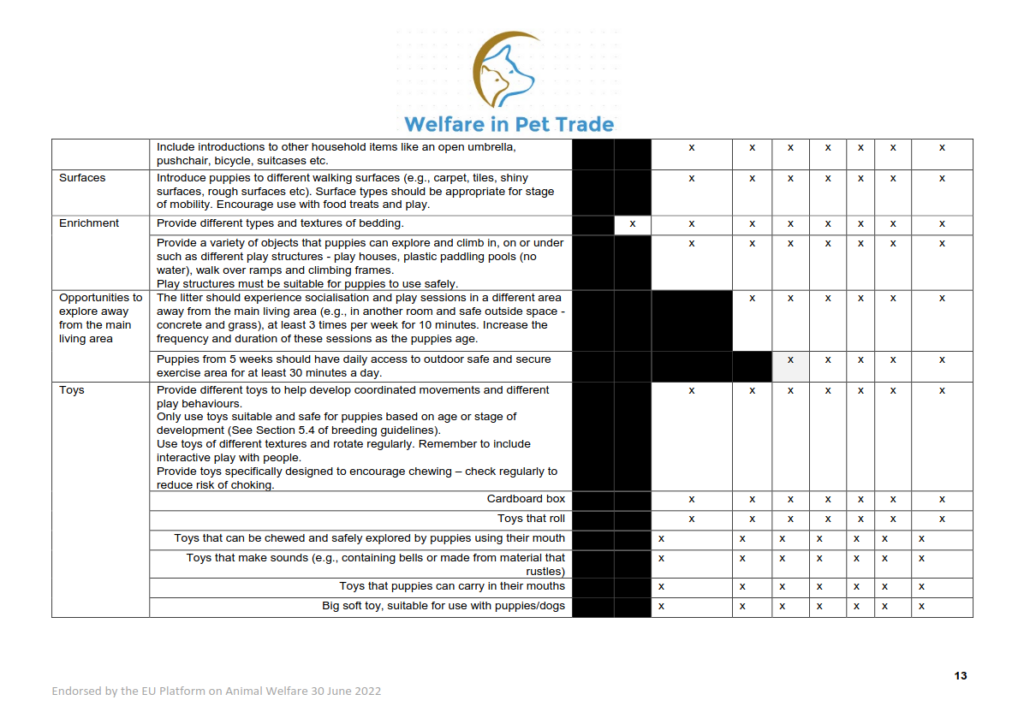
To encourage curiosity, coordination and confidence, puppies are raised in an enriched environment, including:
- Different floor surfaces (tiles, carpet, grass, concrete, textured mats)
- A wide variety of safe toys (chew toys, rolling toys, soft toys, sound-making toys)
- Play structures suitable for puppies (ramps, tunnels, boxes, low platforms)
- Regular access to safe outdoor areas from around 5 weeks of age
Puppies are also encouraged to explore new spaces beyond their main living area, helping them adapt easily to change.
4. Social Experiences with Other Animals
When appropriate and safe, puppies are gradually introduced to:
- The scent of other dogs or cats
- Calm, healthy, vaccinated adult dogs
- Visual contact with other animals in the household
All interactions are closely supervised, positive and adapted to the puppies’ age and confidence level.
5. Early Learning & Daily Routines
As puppies mature, we gently introduce:
- Individual play sessions with humans
- Reward-based basic learning (coming when called, sitting on request)
- Wearing a collar for short periods
- Grooming routines
- Early toilet habits (separate areas for sleeping, playing and toileting)
These experiences help puppies develop self-confidence, frustration tolerance and learning skills, while keeping sessions short and enjoyable.
6. Preparing Puppies for Transition to Their New Home
Before leaving us, puppies are carefully prepared for change:
- Short, positive separations from littermates
- Familiarization with a transport crate
- Gentle exposure to car journeys
Each puppy leaves with a detailed socialisation record, allowing new owners to understand what their puppy has already experienced and how to continue this work at home.
Our Commitment as Breeders
By following this protocol, we commit to:
✔ Respecting each puppy’s emotional needs
✔ Preventing fear-based behaviors through positive learning
✔ Raising puppies who are confident, adaptable and family-ready
✔ Supporting new owners with guidance and transparency
Socialization does not stop when a puppy leaves us — it continues with their family. Our goal is to give every puppy the best possible foundation for a happy life.
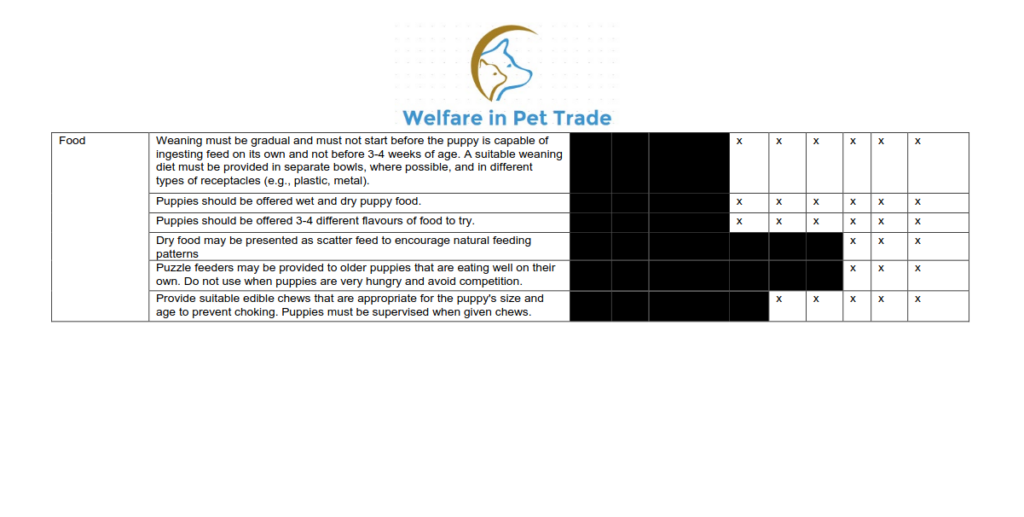
Overview of development stages in the programe